Showing posts sorted by date for query bread. Sort by relevance Show all posts

Kamper Steur

It was once quite common for residents of neighboring towns to mock one another, hugely exaggerating each other’s (supposed) flaws and passing along insulting stories through local folklore. What is far less common, however, is for a town’s own resident to ridicule his fellow citizens.

Yet that is exactly what happened in the little book Kamper Stukjes, published in 1852, a collection of short stories in which the inhabitants of Kampen, a city in Overijssel, are portrayed rather unfavorably. The book was written by “a native of Kampen,” who was later revealed to be the artist Jan Jacob Fels (1816–1883).

The stories describe the people of Kampen as hopelessly foolish. In one tale, they build a new tower but forget to include a staircase. In another, the mayor’s wife’s canary escapes, prompting the mayor to order the city gates closed so the bird cannot possibly fly away. You get the idea. 

Courtesy of Gouwenaar
These stories and name-calling, once meant as insults, sometimes evolve into markers of local pride, and become foods, festivals, and traditions. The story behind today’s dish is about a sturgeon, the famous Kamper steur, sturgeon from Kampen, and is a perfect example of this. 

According to the tale, the bishop is expected to visit the city, and a grand banquet is prepared in his honor. For the main course, a large steur, a sturgeon, is caught. However, word later arrives that the bishop has fallen ill and will postpone his visit. The townspeople are left wondering what to do with the enormous fish, until one clever soul proposes tying a bell around its neck and releasing it back into the water.

After all, when the bishop eventually recovers and comes to town, they would only need to listen for the ringing of the bell to locate the sturgeon and catch it again. Right? Right!

Well, when the bishop arrives, the sturgeon is nowhere to be heard or seen. The story in the book ends here, but somehow along the years, somebody somewhere added an addendum to the story, describing what the bishop was served instead of the sturgeon: Kamper steur, hard boiled eggs in a mustard sauce. 

What's interesting is, is that the dish with its fishy name existed long before the story was published. The earliest reference I've found to this particular dish with the name "Kempensche stuer" was 1574, so long before Fels's story in 1852 - an interesting twist. The mustard sauce is not a surprise: the province of Overijssel is famous for its mustards! 

This dish is quick to make, and makes a good substitute for meat. Every now and then I add a crunchy topping to switch it up a bit - I've added instructions below. Serves four. 

Kamper Steur

6 eggs
2 Tablespoons (30 grams) butter
3 Tablespoons (30 grams) flour
1 1/4 cup (300 ml) vegetable bouillon
2 Tablespoons coarse mustard
Parsley

Hard boil the eggs in your usual manner. If you don't have a method, try this: place them in a pot, cover with water, bring to a boil and boil for one minute, then turn off heat, cover, and let sit for 13 minutes. Move to cold water or an ice bath for 5+ minutes to stop cooking. 

While the eggs are resting in the hot water, melt the butter in a saucepan over medium-low heat. Stir in the flour until you have a paste, about two minutes, and then slowly add the vegetable stock. Keep stirring until you have a thick sauce, about five minutes. Stir in the mustard. Taste, and adjust the sauce with salt and pepper or, if you're like me, more mustard. 

Chop the parsley. Peel the eggs and cut them in half, lengthwise. Place them, cut side down in a dish. Stir one tablespoon of chopped parsley in the mustard sauce, and pour over the eggs. Top with additional parsley. 

Serve hot with a green salad and bread. 

*Optional: if texture is a big thing or if you prefer to have something crunchy, add a golden-brown gratin topping by mixing 1 cup of breadcrumbs/panko (approx. 50 grams) with 1/2 cup grated cheese, 2 Tablespoons (30 grams) melted butter, and the parsley, then sprinkle over the dish and broil for 2–3 minutes until bubbly. It's not original, but it sure is tasty! 


Likkepot

If you grew up in the Netherlands, the meaty bread spread likkepot probably needs no explanation. You’d find it behind the glass at the slager's (butcher) or deli counter (often next to that other meaty bread spread, Filet Americain), where it is scooped fresh into a little container and spread generously on a slice of bread at home. Creamy, savory, and deliciously rich, likkepot is made from leverworst (liverwurst), herbs, and a few well-kept butcher’s secrets. It may well have been a way to use up those leftover ends of tubes of leverworst - we are frugal! - but that's just an assumption on my part, so don't take it for truth.

The name may remind you of the children’s "Naar bed, naar bed, zei Duimelot" rhyme (I've posted it below the recipe to refresh your memory!), but this likkepot is something else. It's a creamy, savory spread, blended with mayonnaise or whipping cream, and seasoned with herbs and spices. The result is smoother and richer than traditional liverwurst and often slightly tangier and more flavorful. 

Many versions are garnished with small pieces of onion, parsley, or red pepper for color and texture. The exact recipe varies by butcher, and you’ll find many different takes on the spread. Some are smoother, some a bit chunkier; some add pickles or other aromatics for extra zing. It's also very versatile. You can enjoy it on fresh bread or toast for breakfast or lunch, as part of a sandwich platter at gatherings, with raw vegetables or crackers as a snack, or even paired with cheese and other cold cuts on a "borrelplank", a charcuterie board, to enjoy with friends while watching TV or playing a board game. 

So because there is not a traditional, standard recipe, likkepot is a dish that you can make your own. I'm sharing two versions: one with pickles, onion and bell pepper, and one with whipping cream and cognac. The first one is a little sweeter and lighter, the second one has a more grown-up taste. I used Braunschweiger liverwurst that's readily available at grocery stores here in the US, but you can use any spreadable liverwurst. If you need a suggestion of what to use where you are, drop me a message and I'll help you look for a good substitute!

For both versions, the same rule applies: taste as you go and adjust to your liking. If there’s an ingredient you’re not fond of (capers, for example), feel free to swap it out for something else, like olives. Want it spicier? You can choose to add Tabasco or sambal. 

This will keep for a few days in the fridge. 

Slager's Likkepot 

16 oz (454 grams) liverwurst
2 Tablespoons mayonnaise
2 Tablespoons tomato ketchup
2 Tablespoons pickles, chopped fine
2 Tablespoons white onion, chopped fine
2 Tablespoons red bell pepper, small dice
Pinch of white pepper

Chop the liverwurst into small pieces. Mix all the ingredients in a bowl. Use a hand mixer or fork to blend all the ingredients until you have a creamy spread. Refrigerate until ready for use. 

Bistro Likkepot

16 oz (454 grams) liverwurst
1/3 cup (75 ml) unsweetened whipping cream
2 Tablespoons capers, chopped fine
2 teaspoons cognac
Pinch of black pepper

Chop the liverwurst into small pieces. Mix all the ingredients in a bowl. Use a hand mixer or fork to blend all the ingredients until you have a creamy spread. Refrigerate until ready for use. 


Kersenpap

Before bread became widely affordable, pap or porridge made from grains, milk, or water was one of the most common Dutch meals. It was often eaten for breakfast or supper (avondeten), especially in rural areas. With the Netherlands’ strong dairy tradition, many pap dishes are milk-based: havermoutpap (oatmeal), griesmeelpap (semolina), rijstebrij / rijstepap (rice pudding), or karnemelksepap (buttermilk) are probably the most common porridges. Nowadays, pap is usually reserved for breakfast, or dessert. 

As dessert, pap can be paired with fruit, especially preserved or seasonal fruit: in a previous post, we talked about appelepap (apple porridge), and today we're looking at kersenpap, cherry porridge, both old-fashioned and traditional porridges. 

Kersen, just like apples, are grown abundantly in the Netherlands. Old-fashioned varieties such as Mierlose Zwarte (or Udense Zwarte), Varikse Zwarte, Udense Spaanse, Meikersen, and Morellen (pie cherries) are still grown in areas such as De Betuwe or the Kromme Rijnstreek, close to Utrecht. The dark, sweet cherries are often used for dishes such as kersenstruif, kersenvlaai, or for today's recipe, kersenpap. Delicious both warm or cold, the sweetness of the cherries cuts through the custardy texture of the pap.

For this recipe I used frozen cherries, but you can also use fresh cherries, or canned. Makes four servings.

Kersenpap
For the cherries
16 oz (450 grams) cherries, pitted
1/2 cup (125 ml) water or the syrup from canned cherries
1 tablespoon sugar*

For the porridge
6 cups milk (1.5 liter)
4 heaping tablespoons (30 - 35 grams) cornstarch
2 tablespoons sugar*
1 teaspoon vanilla extract
Pinch of cinnamon (optional)

In a pan, warm the cherries with 1/2 cup of liquid (either the canning juice, or water) and a pinch of cinnamon. If you are serving the porridge warm, let the cherries simmer on low while you prepare the pap. If the dessert is going to be served cold, retire the cherries from the stove and let them cool before saving them in the fridge. 

Mix the cornstarch with 5 tablespoons milk and stir into a slurry, a paste. Heat the rest of the milk with the sugar and the vanilla on the stove. When the milk is hot, stir in the cornstarch and continue stirring constantly over medium heat until the mixture thickens and just begins to boil. It will thicken further as it cools. 

If serving immediately, divide the pap over four bowls and top with the warm cherries and juice over the porridge. If you plan to serve both cold, pour the pap in a container, top with plastic film touching the pap to avoid a skin, and let it cool, then hold in the fridge. 

*you can also use honey, or a sweetener. If the cherries are canned on heavy syrup, sugar may not be necessary: taste and decide if it's sweet enough. 


Oudewijvenkoek

We were not raised to say cusswords, so even speaking the name of this particular ontbijtkoek had us in stitches when we were kids: oudewijvenkoek, old woman's cake. In Groningen, where this spiced breakfast cake is especially beloved, people even shorten it to olwief, which only made it sound funnier to our young ears.

The Dutch word wijf originally meant simply “woman”: nothing rude, nothing sharp-edged. But over the centuries, the meaning drifted. Nowadays it’s generally used in a not-so-friendly way, summoning the image of a coarse woman with few social graces, shouting across the street with her hair in curlers and a cigarette hanging from the corner of her mouth. You can hear it in familiar insults like stom wijf or viswijf, neither of which you’d ever want applied to you.

And yet, Dutch can be wonderfully contradictory. That same word, "wijf" is also used in prachtwijf, a term of admiration for a strong, capable woman who’s confident, honest, and not afraid to speak her mind, a real treasure of a person.

Language is funny that way: it remembers where it came from, but it also adapts, stretches, contradicts itself, and sometimes gives us words that can mean an insult or a compliment depending on how they’re said. And nestled somewhere inside all of that is this charming old-fashioned loaf cake with the mischievous name that used to make us giggle. 

The reason behind this bread's name is not entirely clear, although generally research says that it's because it's so soft that even old women with no teeth can enjoy it. I think that can probably be said for all ontbijtkoeken. The distinguishing factor for this cake is however the taste of anijs, aniseed.  

Anise is not a stranger to our kitchen, of course. It shows up in bread toppings like muisjes, in flavorful rolls like the anijskrollen from North Brabant, and in nightcap drinks like anijsmelk, sweet and hot anise flavored milk. Once anise made it to the Netherlands from the Mediterranean, it became a tradition to give kraamanijs (crushed anise seeds) to women who had just given birth, as it was believed to help the uterus recover and stimulate milk production. This led into the commercial production of muisjes, anise seeds coated with sugar, that are served on rusks to celebrate the birth of a child. Anise was also given to the elderly because it was supposed to help with appetite, gout, and rheumatism. 

We may never find out why this cake is called what it is. But what I do know is that it's a delicious addition to your breakfast table (or midnight snack) - as long as you like anise! 

Oudewijvenkoek

1 cup (150 grams) rye flour
1 cup (150 grams) all-purpose flour
3 Tablespoons baking powder
2 teaspoons cinnamon 
2 heaping teaspoons ground anise*
1/2 teaspoon ground cloves
1/2 teaspoon ground ginger
1/2 teaspoon ground coriander seeds
1/2 teaspoon ground cardamom
1/4 teaspoon nutmeg
1/2 cup (100 grams) sugar
Pinch of salt

1/2 cup (150 grams) honey
2 Tablespoons (40 grams) unsulfured molasses
1 cup (250 grams) milk
2 eggs

Heat the oven to 325F/165C. Mix the dry ingredients and the wet ingredients in separate bowls. Grease a 9 x 5 inch cake pan (23 x 13 cm). Gradually mix the dry into the wet ingredients, and stir until there are no lumps, then pour the batter in the pan. Let it settle for two minutes, until you can see the baking powder starting to work, and add the pan to the oven. 

Bake on the middle rack for about 50 minutes, or until a skewer comes out clean. Take the pan out of the oven, and let it cool for about twenty minutes. Run a spatula or butter knife carefully around the edge of the cake, and carefully turn the pan over. Let the cake cool for a few minutes, then wrap it, still warm in cling or food film. Preferably, let it rest overnight so that the flavors can develop. 

The next day, dust with a little bit of powdered sugar, or gestampte muisjes if you have them. Slice and butter each slice generously. 


*Ground anise can often be found in Asian stores. If you have gestampte muisjes, use two heaping Tablespoons instead of two teaspoons of the ground anise. 


Speculaaskruiden

Speculaaskruiden, speculaas spice mix, are a traditional Dutch spice mix used to make our famous speculaas cookies, a traditional treat during the year with a cup of coffee or tea, or as a bread topping (don't judge! LOL). Speculaaskruiden are also widely used during the winter months, especially around Sinterklaas celebrations and the holiday season for other types of bakes. 

Its warm and aromatic blend reflects centuries of Dutch culinary tradition and trade history. The origins of speculaaskruiden are a product of the spice trade that flourished in the Netherlands during the Golden Age (17th century). Dutch merchants through the Dutch East India Company (VOC), brought spices like cinnamon, cloves, nutmeg, and ginger from Asia. These exotic spices became integral to Dutch baking, particularly for festive treats as they are fairly expensive, either on their own, or combined in a speculaaskruidenmix.  

Speculaaskruiden are a blend of warming spices, with recipes varying slightly depending on personal preferences. The basic composition includes: cinnamon (the dominant flavor), cloves, nutmeg, mace, ginger, and sometimes cardamom and/or white pepper. Cinnamon constitutes the largest portion, giving the mix its characteristic sweet warmth. Some will use anise or coriander. 

While speculaaskruiden are best known for their role in speculaas bakes, such as gevulde speculaas, and speculaascake, it is versatile enough to also be used in other dishes and treats. Try a pinch of it in your coffee, tea, or hot chocolate, in oatmeal, in pancakes, or mixed in with butter for a sweet, buttery spread on your breakfast toast. You can also add a pinch to beef stews, meat pies, or roasted vegetables, such as butternut squash. 

Here’s a simple recipe for making your own speculaaskruiden blend at home. The proportions can be adjusted to suit your taste, but this version offers a balanced, traditional flavor. Having said that, everybody has a different preference. You may want to make a small quantity first (maybe 1 Tbsp cinnamon and 1/4 teaspoon cloves, nutmeg, mace, and ginger, and 1/8 tsp cardamom and white pepper), and use it in a cookie recipe to see if you like the taste. It's easier to adjust and get exactly the taste you want. 

Can't be bothered or don't have the time? Amazon also sells speculaaskruiden, but we haven't tested them to see if the flavor gets close. When in a pinch, you could also use pumpkin pie spice or apple pie spice. Read the ingredients list on each and adjust accordingly.

Homemade Speculaaskruiden Recipe

4 Tbsp ground cinnamon
1 Tbsp ground cloves
1 Tbsp ground nutmeg
1 tsp ground mace
1 tsp ground ginger
1/2 tsp ground cardamom
1/2 tsp ground white pepper (optional, for a mild kick)

Measure out all the spices into a small mixing bowl. Mix thoroughly to combine, ensuring there are no clumps. Store the blend in an airtight jar or container in a cool, dry place. It will keep its potency for up to 6 months.

Photo by Wouter Supardi Salari on Unsplash

Rozijnenbroodschoteltje met appel

Several weeks ago, I made a batch of raisin bread, rozijnenbrood, to enjoy, give away, and store for later use. Raisins and currants have the tendency to absorb moisture from the bread, so after a few days the bread tends to get a little dry. Fortunately, it toasts well, and there is a certain bliss in having a warm, toasted slice of raisin or currant bread, with a little bit of "good" butter, spread across the top, and if so desired, a slice or two of aged cheese. There is little less that comforts the soul on a blistery, cold day like today! 

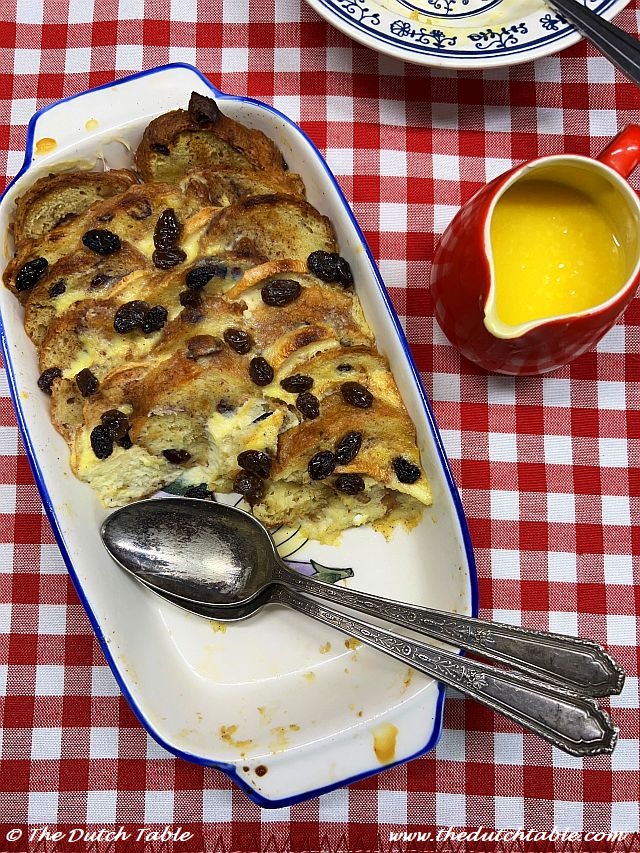
There are also other ways of using up old bread, like in today's dish: a bread pudding, or broodschoteltje (bread dish), made with raisin bread, apple, eggs, milk and sugar. In my search of traditional recipes, I frequently come across dishes that use up "restjes", leftovers, from the previous day. Any meat left from the Sunday dinner will be served as a cold cut, in a huzarensalade, or turned into croquettes the next day. Vegetables are repurposed into salads or soups, and bread is turned into wentelteefjes (French toast) or broodschoteltjes. From having lived in other countries and among other cultures, I know that this is not unique to the Dutch, but I do think that we take a particular pride in being thrifty, or zuinig

And we have plenty of sayings to support being thrifty: in Limburg they say "dae twieë zwegelkes noeëdig heet um zien piêp aan te staeke, weurtj noeëts riêk" (he who needs two matches to light his pipe, will never be rich), in de Achterhoek it's said that "dunne plekskes sniën, is ' t behold van de wörste" (cutting thin slices preserves the sausages), and in Zeeland, "oans bin zunig" (we are thrifty). This last one even inspired various margarine commercials in the 80s.

Well, I'm not from Zeeland, but I do like to be zuinig or deliberate in my spending, so this morning I am using up the rest of the rozijnenbrood to make a bread pudding. If you don't have rozijnenbrood, just use regular old bread and add a handful of raisins. Don't have an apple? See if you can scrounge up a pear, or use dried fruits like apricots. Even dollops of the last of the strawberry jam will make a great addition: just have fun with it! As they say in de Achterhoek: "Wa’j ow spaort veur de mond, is vake veur de katte of de hond" - what you save for your mouth, often ends up being for the cat or the dog. A great encouragement to look through the cupboards and fridge to see what can get used up, in true Dutch fashion.

Rozijnenbroodschoteltje met appel

8 thick slices raisin or regular bread (about 500 grams)
1 apple, cored and cubed
1 tablespoon (15 grams) butter
2 cups (500 ml) milk
2 eggs
1 teaspoon vanilla 
1/3 cup (65 grams) sugar
1 teaspoon cinnamon (optional)
Pinch of salt

Cut the bread into cubes and mix with the apple. Butter a casserole and add the bread and apple. In a bowl, add the milk and the eggs and beat them until all of the egg has been incorporated. Mix in the rest of the ingredients. Heat the oven to 350F/175C. In the meantime, on medium heat on the stove, warm up the milk and stir until it starts to thicken a little bit, about eight to ten minutes. Do not let the milk get to a boil, as the egg will curdle.

Pour the hot milk over the bread and apple mix. If you want a bread pudding with a crispy top, do not mix, otherwise give it a stir or two so that all the bread is covered. When the oven is up to temp, place the casserole on the middle rack, and bake it for 40-45 minutes or until golden.

Serve hot. I like to add a pat of butter or a splash of heavy cream, but it doesn't need it (then again, neither do I, but there you have it :-).


Gebakken Kaasplak

The other day, I was rummaging around in stacks of 1950's women's magazines looking for dinner ideas, as I often do. I love to see what dishes the men and women of my mom's and grandma's time prepared and ate. Sunday meals were certainly more elaborate as they appear to be nowadays, I would say, starting with a soup, then a main course (potatoes, meat and vegetables), and ending with a (dairy) dessert. Whatever was left of the meat, was frequently served the next day sliced for lunch, cold, with bread and pickles, or transformed into a new dish, often a casserole, or hot snacks like kroketten. Rice or elbow macaroni was cooked once, and a portion kept aside to turn into desserts for the next day, and vegetables that were left went into the soup, stamppots, or pan-fried until crispy. Nothing was wasted! 

On days that meat was not on the menu, I frequently saw something else in its stead: gebakken kaasplak, fried cheese slice. Recipes among the different magazines varied a little bit, so I ended up creating my own. I think it's my new favorite! 

It's a simple yet delicious dish made by breading a thick slice of cheese and frying it in butter until it's golden and crispy on the outside while remaining soft and melty inside. Pick your favorite cheese, and go for it! You can serve it as a meat substitute with dinner, as a hamburger substitute on a roll with fresh lettuce, tomato, pickles and onion, or as a snack with a dollop of mustard. 

Here in the US, cheese can be found pre-sliced, so-called deli-style. Each square is approximately 3.5 x 3.5 inches (8.5 x 8.5 cm), and weighs about 1 oz /28 grams each. Do not use floppy American cheese slices for this, but select sturdy Sharp Cheddar, Aged Gouda, or Pepper Jack slices. 

Gebakken kaasplak

8 square slices deli style sliced cheese
2 eggs
1 cup panko or breadcrumbs
4 tablespoons (55 grams) butter
Whole grain mustard

Lay out the cheese slices. Spread a teaspoon each of mustard on four slices and top each with a second slice. Beat the two eggs in a shallow dish. and pour the breadcrumbs in another shallow dish. 

Dip one of the stacked cheese slices in the egg, turn it over to coat the other side, and lift it out of the egg. Let it drip, and then coat the cheese with breadcrumbs on all six sides. Repeat with the rest of the cheese. 

Heat the butter in a frying pan. Dip the breaded cheese in the egg again, then again in the breadcrumbs and put them in the frying pan, repeating until all four cheese patties are in the pan. On medium heat, fry all sides of the cheese patties until golden brown, about five minutes. Serve warm.


Rozijnenbrood

Breakfast is always a little bit of a feast in the Netherlands, especially on the weekends, when there is a bit more time to prepare something special. Our breakfasts are certainly not for the indecisive. Are you going to go for white soft rolls or crunchy ones? Beschuit, toast, or knäckebrot? White, brown or volkoren bread? Not to mention having to choose between the vast amount of toppings, sweet or savory, cold cuts, cheeses, eggs.....or are you skipping bread altogether and prefer a big bowl of pap, porridge? The breakfast table holds a dazzling array of choices, and is such a treasure trove of delights - worth taking time for.

The only thing I think we can all agree on is that savory comes first, and sweet comes last - but even that unwritten rule is sometimes hazy: where does a slice of bread with cheese and jam, or peanut butter and hagelslag fall? Is it all-in-one, or does it come after the savory and before the sweet? And is three slices of bread too much for our Calvinistic genes? Interesting things to ponder while enjoying a cup of coffee or tea, and another slice of something good :-)

One of the breads that always makes the breakfast table a little bit more festive and special is a pillowy loaf of raisin bread, rozijnenbrood. A sweet dough, flavored with just a hint of cinnamon, and juicy, sweet raisins all throughout the loaf. This bread is good with just a lick of butter, or topped with a slice of aged cheese. It can also be used as a base for wentelteefjes, or broodschoteltjes

Don't be alarmed by the large amount of raisins that go in the bread: they will all fit! For this recipe, I rinse the raisins in warm water, let them sit in the warm water for a few minutes, then set them out to air dry for a couple of hours. I want them somewhat plump-ish on the inside but not overly saturated, and dry on the outside. 

Rozijnenbrood

2 cups (250 grams) raisins
1 3/4 cup (250 grams) all-purpose flour
2 tablespoons (25 grams) sugar
1/2 teaspoon (4 grams) salt
1/8 teaspoon cinnamon
1/2 cup (125 ml) water or milk, lukewarm
2 teaspoons (8 grams) active dry yeast
3 tablespoons (40 grams) butter, softened
1 egg, beaten

Rinse the raisins in lukewarm water, and set them out to air dry. 

Mix the flour, sugar, salt, and cinnamon in a bowl. Sprinkle the yeast on top of the lukewarm water or
milk and let it stand for five minutes, or until it's frothy, then mix it in with the dry ingredients. Knead, either in a machine or by hand, until the dough more or less comes together, then add the butter and most of the egg (keep two teaspoons behind for brushing the top). Continue to knead the dough until you have  cohesive whole, about three to four minutes. Pat the dough into a ball, cover and let it rise for a good thirty minutes, or until about not quite doubled in size. 

Dust the counter with a little bit of flour, pat the air out of the dough, and put a handful of raisins on top. With the use of a scraper, or a floured hand, fold the dough over itself, incorporating the raisins. Repeat this until all the raisins have found a spot in the dough. 

Shape the dough into an oval loaf, grease a 8 x 4 inch (20 x 10 cm) loaf tin, and place the dough inside. Cover and let rise at room temperature until the dough peeks over the top: about an hour, but depending on the actual temperature of the room, this may take less - just keep an eye on it. When ready, brush the top with the remaining egg.

Heat the oven to 350F/175C and bake the loaf, in the middle, for about fifteen minutes, then place aluminum foil over the top to keep it from browning too fast. Bake for another twenty minutes, or until golden brown*. The internal temperature should measure 185F/85F and rising (meaning that the digital thermometer reaches the temperature pretty quickly and continues to rise beyond that). 

Pull the bread, let it cool in the tin, and remove it when it's lukewarm. Let it cool down on a rack before cutting. 


 * I don't follow the "bread is done when it sounds hollow when you tap it" because I don't know what "hollow" sounds like to anybody else, so I temp the bread with a digital thermometer. 

Soepballetjes

"Geef mij maar soep, soep, soep met balletjes
" sang Rita Corita already in the 50's, and for those of you who listen to the Groeten Uit Het Zuiden podcast from Jordy Graat and Rob Kemps, may remember that last season's soup component started with the "Soep met Ballen" song by Leo van Helmond. 

Even the sheep Veronica, a fantastic poem by Annie M.G. Schmidt, brings up "soep met ballen", soup with meatballs, as a delightful, delicious, start of a dinner. It is truly an engrained and traditional addition to our kitchen, to our many soups, and delights many, young and old. 

So what are these soepballetjes? That's an easy answer: small meatballs that are added to traditionally tomato or vegetable soup, but they can also be added to other soups. Beyond that there is a vast choice of flavors, combinations, and options.  Commercially, soepballetjes can be bought pre-made and blanched in jars with bouillon, in cans with salted water, and in the meat section at the grocery store or at the butchers you can also buy them pre-seasoned and raw. 

We have soepballetjes made with beef, with half-om-half (half beef, half pork), made with chicken, turkey, or vegan. They come with different seasonings and in different variations. I've seen people use, outside of salt and white or black pepper, any combination of onion powder, nutmeg, coriander, ginger, mace, cardamom, chili powder, paprika, bay leaf, and a whole host of dried spices: parsley, thyme, oregano....

And then of course there are the soepballetjes made at home, where those who do make them, have their own family recipe or preferences. Some make them fresh while making the soup, others make a big batch every now and then (a fun family affair!), blanch and freeze them, still others fry them first so that they get some color. Some make them small, others make them bigger. Some only use meat, others add breadcrumbs or egg. All this to say that there is no "official", one way to make soepballetjes. But if you've never made them before and would like to give it a try, here's a very basic recipe. 

I make mine ahead of time by cooking them in bouillon and storing them in a container in the freezer. That way, when I make soup, I just grab a handful and add them last minute. The following recipe makes about 90 soepballetjes (I portion mine out at 5 grams, 0.2 oz). 

Soepballetjes

8 oz (225 grams) ground beef
8 oz (225 grams) ground pork
2 tablespoons bread crumbs
Salt
Pepper
Optional: nutmeg
1 bouillon cube of choice

Mix the two meats together with the breadcrumbs, and season with salt and pepper. Put a pot on the stove with 4 - 6 cups (1 - 1.5 liter) of water, add the bouillon cube (I use vegetable bouillon), and bring up to a low simmer (do not boil). Use a small ice cream scoop (mine is 1 teaspoon sized) to portion the meat and roll one or two mini marbles, as a tester. Add to the simmering bouillon. They will sink to the bottom first, and as they cook, float to the top. Remove the tester and taste. Adjust the seasonings to your liking, but remember that the flavor should not overpower the soup they're going to be in. 

Continue to portion out the meatballs. I make them fairly small, at 5 grams each (0.2 oz) but that is purely a personal preference, so go with what you feel is the right size for you. Simmer them in the bouillon, and remove them a few minutes after they float. Spread out on a baking sheet, cool, and then freeze them. Once frozen they can be kept in a container in the freezer. 

The bouillon can be used as a base for soup, so if you are doing that today, keep some of the soepballetjes behind - about four or five per person. As pork has quite a bit of fat, you may want to degrease it first, but again: that's a personal preference. 


Tomatenschoteltje

There is an abundance of "schoteltje" recipes in our traditional kitchen, like "broodschoteltje", "macaronischoteltje", "beschuitschoteltje", "rijstschoteltje". It appears to be a collective name for predominantly sweet dessert dishes, but not always, like today's savory dish. 

I don't really have a good translation for the "schoteltje" part. Schoteltje literally means "small dish". The recipes themselves fall somewhere between small casseroles, au gratin dishes, or cocottes - but they're not always a full-blown casserole, which would imply cooking for a lengthy time in the oven using raw ingredients (because that would be an "ovenschotel", an oven dish), and not all recipes require gratin, and sometimes cocottes are initially meant to contain personal servings, which also doesn't apply. So for now, I am going with the unsatisfactory English name of "dish". Maybe you can help me come up with something better? 

Most schoteltje recipes are generated straight out of our frugal tendencies: they use up old bread, leftover rice or pasta, even oliebollen, and often incorporate eggs, a food that is still affordable for most. So too this recipe, that uses up a glut of tomatoes, a handful of leftover shredded cheese, and a few eggs.

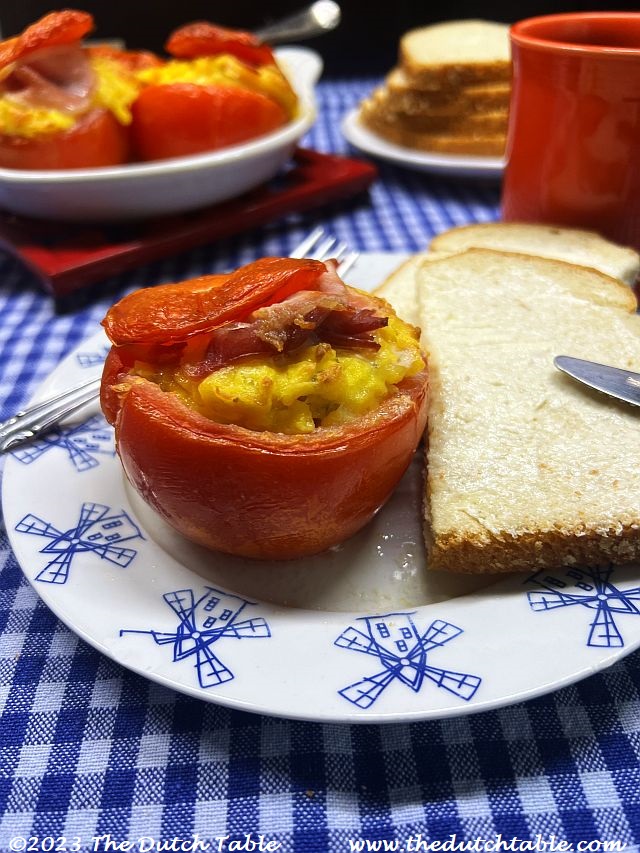
This recipe is a great lunch or brunch dish: tomatoes stuffed with cheesy scrambled egg, topped with bacon, and baked in the oven until the skin and flesh of the tomatoes softens and become jammy. Together with a green salad, or a few slices of bread or toast, it's a satisfying meal, as well as an affordable one. 

Tomatenschoteltje

4 large tomatoes
5 eggs
1 cup (100 grams) shredded cheese
4 strips bacon
Butter
Salt
Pepper
Herbs (optional)

Cut the top of the tomatoes, and put the caps aside for now. Hollow the tomatoes out with the help of a spoon. Save the seeds, or puree the tomato pulp and save it for soups. Sprinkle a little bit of salt on the inside of each tomato, and place it upside down in the dish. In the meantime, crack the eggs and whisk them, then melt the butter in a skillet. Add the egg mix, and when it starts to set, add the cheese, then scramble the eggs. Season with salt and pepper and herbs, if desired. Don't overcook the eggs.

Heat the oven to 400F/200C. Turn the tomatoes right side up, stuff them with the scrambled eggs, and top each one with a strip of bacon. Replace the cap, add a little bit of water to the bottom of the dish, and bake the tomatoes for 20 - 25 minutes, until the caps are slightly shriveled and the tomatoes are starting to burst. 

Serve warm, with toast, or a green salad. Eet smakelijk!


Bitterkoekjes

Almonds have a prominent place as an item of luxury in the baked goods of the Netherlands. One of our oldest cookery books, Een notabel boecxken van cokeryen (A Remarkable Book on Cooking) published around 1514 by Thomas van der Noot in Brussels, already contains several almond based recipes. Christmas stollen are enriched by having a ribbon of almond paste running through its middle, speculaas is enhanced by adding a layer of almond paste inbetween, and numerous cookies and pastries contain almonds in various ways. 

So too today's cookie, the bitterkoekje, bitter cookie, so named after the bitter almonds that were traditionally used in its recipe. In a different book, this one from 1832, it said that "cookies made from bitter almonds" were shared at weddings to symbolize the ups (sweet) and the downs (bitter) of marriage. What a pity that this custom is no longer practiced! 

Bitterkoekjes are crispy on the outside and slightly chewy in the middle, and are made with the basic ingredients of ground almonds, powdered sugar, and egg white. The bitter flavor comes from pure almond extract. so check your extract to make sure it lists "bitter almond oil" in the ingredients.  Because they don't contain any flour, these cookies are also a good gluten-free option. If you choose almond flour instead of grinding your own, read the ingredients list to make sure there are no other additives.

Bitterkoekjes
1 cup (150 grams) powdered sugar, packed
1 1/2 cup (150 grams) finely ground almonds 
Pinch of salt
1 teaspoon pure almond extract
2 eggs, egg whites only, divided

Line your baking sheet with a double layer of parchment paper. Heat the oven to 375F/190C. Sift the powdered sugar. Mix the almond with the powdered sugar, the salt, the almond extract, and one egg white until it's well mixed. Add a little bit at a time of the second egg white until you have a consistency that can be piped but is not too liquid that it will spread on its own - look at the picture to the right for an example of consistency. 

Pipe marble sized dollops onto the baking sheet (or use a tiny ice cream scoop, or two small spoons) leaving a little bit of space between. Bake for 10 - 15 minutes, but check the color after 10 minutes. Because of the high sugar content, these tend to go from light golden to dark brown in no time, so keep checking! Makes approx. 60 small cookies.

Cool on the paper on a rack, and when they're cooled, peel them off the paper. Keep in a tin. As time passes they will get hard if you're in a dry climate - a slice of bread in the tin will help soften. 


Amazon Prime Shopping Suggestions: 

Disclaimer: if you buy through any of the links in the Amazon Prime Shopping Suggestions section, the Amazon Services LLC Associates Program will pay us a small commission on qualifying purchases. It does not increase your cost or price, and it will help us keep the website running. Your support is very much appreciated! 

Don't have Amazon Prime but want to give it a try? This link offers a 30 day trial. 

Amandelspijs

Photo by Tetiana Bykovets 
on 
Unsplash
It's hard to say when almonds made their entrance into the Dutch kitchen. In Europe, almonds appear in recipes from the late Middle Ages (from 1300) on, often in combination with honey, and spices from Asia. These products came with traders from the Middle East during the Crusades. The oldest Dutch recipes for almond recipes (particularly marzipan) date from the beginning of the 17th century.

Almonds are still a big component of our baking traditions, mainly during the various holidays such as Sinterklaas and Christmas, where it makes its appearance next to speculaas, flavored with a tantalizing combination of spices such as cinnamon, ginger, nutmeg, coriander, and ginger, and as a core in the traditional Kerststol, the Christmas bread. During the rest of the year, we see it appear in gevulde koeken, (almond paste filled buttery cookies), amandelbroodjes (almond paste turnovers), rondos, and as an optional base for apple and pear cakes.

Because almond paste tends to be fairly expensive, the commercial baking sector also employs something called "banketspijs" - made white beans and almond extract. If you are buying almond flavored products, read the label to see if you're getting almonds or beans. Both have pros and cons. 

This recipe is for a batch of almond paste, and is easy to remember: the same weight of almonds and sugar, mixed with an egg, lemon zest, and a splash of almond extract, if you want to boost the almond flavor a bit. It holds fairly well in the fridge for about a month. Make sure to use clean utensils when taking paste out of the container for recipes, and return it to the refrigerator as soon as you're done. 

Amandelspijs

2 cups (250 grams) almonds, blanched and chopped*
1 1/4 cup (250 grams) sugar
1 egg
Zest of a small lemon
1 Tablespoon almond extract (optional but recommended)

Blend the almonds and the sugar together in a food processor or blender until well combined, like wet, fine sand. Add in the egg, the lemon zest and, if desired, a tablespoon of almond flavoring. Mix everything together into a thick paste. Store in a covered container in the fridge.

*nowadays it's easier to find almond flour or almond meal. Read the label to make sure the only ingredients are almonds. 

Alternative Ingredients & Variations

Not a big fan of almonds? Try walnuts instead. Flavor the paste with a walnut flavored liquer or walnut extract. 


Amazon Prime Shopping Suggestions: 

Disclaimer: if you buy through any of the links in the Amazon Prime Shopping Suggestions section, the Amazon Services LLC Associates Program will pay us a small commission on qualifying purchases. It does not increase your cost or price, and it will help us keep the website running. Your support is very much appreciated! 

Don't have Amazon Prime but want to give it a try? This link offers a 30 day trial. 


Oliebollenbroodschotel

Bread puddings, or broodschotels, as they are called in Dutch, occupied a steady section in older cookbooks, but as of late I don't see them as much, which is a pity. Especially nowadays, when frugality seems to be a wise choice, sweet or savory bread puddings may play a big role in providing sustenance for a small budget. The Dutch are traditionally big bread eaters, with usually two meals in the day consisting of bread, and on top of that we're pretty frugal, so it is not surprising that cookbooks from mid-last century had that many broodschotel recipes. The concept was easy: tear or slice up old bread, soak it in a mixture of milk and egg, add flavorings, and bake in the oven or in a frying pan, as is the case with wentelteefjes

 "Wie wat bewaard, die heeft wat" said my oma Pauline triumphantly many times, "he who saves something, has something". She lived through the two wars and was resourceful and frugal, a quality that many of us will recognize in our parents and grandparents who lived through those times. Saving is one type of skill, and so is making leftovers into another tasty dish, so that food does not go to waste. And that is so true for today's leftovers, oliebollen from New Year's Eve. Oliebollen are best freshly fried, but make for a wonderful bread pudding. So, IF there are any left or if you have a chance to bake some extra and set them aside, this may be a great way to welcome the new year: bread puddings are a lovely treat for breakfast! 

And as with so many of our recipes, make this your own. If you like raisins, you can always sprinkle  them in with the sliced oliebollen, or add a chopped apple, dried apricots, or leftover cranberry sauce from your Christmas dinner, a handful of walnuts......as you can see there are plenty of opportunities to come up with a new family favorite!  

Oliebollenbroodschotel

8 oliebollen

1 tablespoon butter (15 grams)

1 cup (250 ml) milk

1/2 cup (125 ml cream)

2 tablespoons sugar

2 eggs

1 teaspoon vanilla essence

Optional: dried fruits, apple slices, vanilla pudding, cinnamon, powdered sugar

Heat the oven to 375F. Butter a casserole or baking dish. Slice the oliebollen and place them upright, alternating, in the casserole, so that they're nice and snug. Mix the milk with the cream and the sugar, and warm slightly on the stove, stirring until the sugar is dissolved. Remove from the stove, let it cool down to lukewarm, beat the eggs and stir into the milk, together with the vanilla. Pour over the oliebollen in the dish, but make sure that the liquid stays beneath the casserole line. 

Bake on a baking tray for 25 - 30 minutes. As the top oliebollen stay exposed (and crisp up) you may want to check after 15 minutes to make sure they're not burning. If they are getting too dark, cover the dish with aluminum foil. 

Sprinkle with cinnamon, and/or powdered sugar, or serve with warm vanilla pudding or custard. 


Karnemelksepap

It is probably not surprising to read that the Dutch dairy industry is in the top five of the world's largest exporters, generating close to 7.5 billion euros a year. Up to sixty five percent of its dairy is sent outside of the country borders, with cheese and powdered milk being the main product. And the 35% that stays in the country is divided up in cheese, milk, butter, vla, yogurt, and buttermilk. Our most famous product is cheese, of course, and our most unique one our vlas. And it's still not uncommon to see people drinking a glass of karnemelk, buttermilk, with their bread lunch, or as a refreshing and rehydrating choice on a hot summer day. 

But buttermilk is not to everyone's liking, with its sour taste and thick consistency. Whereas milk, vla, and yoghurt have advanced and are now available in many flavors and with added benefits such as extra calcium, vitamin D, or probiotics, karnemelk has pretty much stayed the same - and is slowly losing market share to all the new fancy flavors. Which is unfortunate, really, because buttermilk doesn't need any additions: it contains all the essential amino acids for the body, as well as calcium, vitamin B6 and B12, and generally contains less lactose than regular milk. Karnemelk also contains less fat than milk, and is beneficial for your intestinal system. 

Besides a beverage, karnemelk is also used for various desserts, like this delicious karnemelkpudding. It is also the main ingredient for this old-fashioned but very versatile dish: karnemelksepap, or buttermilk porridge. A slightly sour porridge, thickened with flour, and sweetened with a little bit of sugar, honey or syrup, the porridge is a blank enough canvas to adjust it to your own liking. It can be eaten hot for breakfast or lunch, and hot or cold as dessert. One combination that is popular with the farming community in the North is the so-called "zoepenbrij", where buttermilk is often mixed with whole grains, like cooked barley, or oats. In that case, omit the flour, as the grains will thicken the porridge. 

The key to making this dish is to keep a close eye on the buttermilk and not let it boil too high, as the buttermilk will curdle. Constant stirring will help. Makes four regular servings, or two large ones! 

Karnemelksepap
4 cups (1 liter) buttermilk
1/2 cup (75 grams) regular flour
Pinch of salt
Sweetener to taste (brown sugar, honey....)
Nuts, berries, and/or chopped fruit to your liking

In a small bowl, mix the flour with enough buttermilk to make a pourable, thick batter. Heat the rest of the buttermilk in a thick bottomed pan at medium low heat, stirring frequently. Don't let the milk come to a high boil, just an occasional bubble that breaks the surface. Stir in the flour mix and keep stirring until it's absorbed. Add the pinch of salt. Increase the heat to medium high, and continue to stir until the porridge thickens, and more bubbles come to the surface, for a few minutes. Any time you see a light yellow, watery streak in the porridge, it may mean that it's about to curdle, so pull the pan from the heat and continue to stir. 

When the porridge has thickened, pour into bowls. Top with sugar or honey, and add a handful of nuts and frozen berries, or seeds. 


Paasstol

"
Een ei is geen ei, twee ei is een half ei, drie ei is een Paasei!" goes a famous Dutch children's verse. We're getting ready to celebrate Pasen, Easter, with plenty of eggsaladPaasbroodPaashaasjes or even a beautiful Paastaart, an Easter cake, complete with advocaat

Not to be outdone by anyone, we celebrate Easter for two days. The first day is Easter Sunday, or First Easter Day, Eerste Paasdag. The gathering of family and friends around the breakfast, lunch, or dinner table is key on First Easter Day. Stores are closed, and children are dressed in their "Paasbest" (Easter Best) with new clothes and shoes. All the eggs are dyed in bright colors, hidden and if lucky, all found. The breakfast or brunch table will be laden with different types of bread (multigraintiger rolls, currant rolls), as well as omelets, smoked salmon, cold cuts, and cheese, and plenty of hot coffee and tea. This is not a time to rush, but to enjoy each other's company, and several times the breakfast turns into brunch which then turns into lunch. As long as it's gezellig

And as the world gets back to work and resumes normal life on the Monday after Easter, the Netherlands celebrates Second Easter Day, or Tweede Paasdag. Where most stores and businesses remain closed, Second Easter Day is seemingly THE day to go furniture shopping. The large furniture stores, meubelboulevards, are open to the shopping public. Some of these are all set up for a fun day: playgrounds for the kids and a tearoom or lunchroom for mom, to make it gezellig

And if you're skipping brunch or have friends and family over for coffee or tea later, you can also serve something sweet: a Paastaart, or Easter cake, a variation on our traditional slagroomtaart, whipped cream cake. Decorated with fluffy whipped cream, a light biscuit batter and an adult amount of advocaat, this Easter cake will put a smile on your face. 

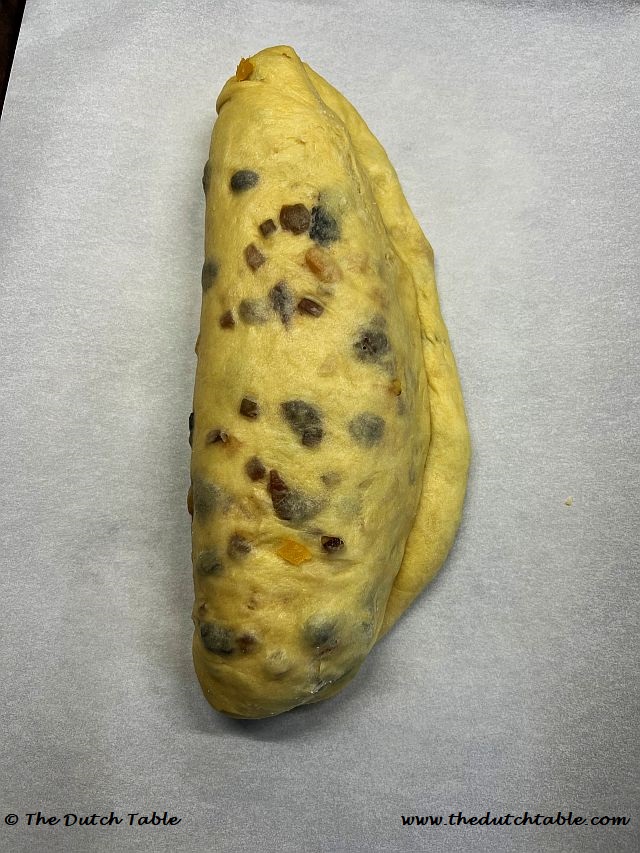
Today's Paasstol will look very familiar to those who like to celebrate Christmas with a kerststol, a dried fruit studded bread with a thick ribbon of almond paste, and covered in powdered sugar. Both share the same recipe and sometimes even fillings: the only difference is that at Christmas we top the bread with powdered sugar, at Easter we sprinkle it with shaved almonds. But hey! if you prefer powdered sugar to apricot jam and nuts, go for it. If you don't like raisins, don't put them in - just substitute the amount with a different dried fruit. It's all good! 

Paasstol is best eaten with a generous lick of butter. Whip the almond paste out of the slice, and spread it on top of the butter. The bread is also really good toasted!

Paasstol

1/2 cup (75 grams) golden raisins 
1/2 cup (40 grams) mixed and chopped dried fruits, like cranberries, currants, cherries, dried apricots...
1/4 cup (60 ml) orange juice, warm  - some prefer rum or a flavored liqueur
2 1/2 cups (350 grams) all-purpose flour 
3/4 cup (175 ml) milk, warm 
2 teaspoons (7 grams) active dry yeast 
1/4 cup (55 grams) sugar 
1/2 teaspoon (4 grams) salt 
1 egg, beaten 
1/2 stick (50 grams) butter, melted 
1 teaspoon lemon or orange zest

For the filling:
1 small can of almond paste* (or make your own

For the finish:
2 tablespoons butter, melted (25 grams)
1 tablespoon apricot jam, mixed with 1 teaspoon hot water
1/2 cup (50 grams) slivered almonds 

Soak the raisins and the dried fruits in the warm orange juice for a good fifteen minutes, then drain. Spread them out in a colander or baking sheet so that they can air-dry while you continue with the recipe. 

In a large bowl, place the flour. Make a well in the center and pour the warm milk in, and sprinkle the yeast on top. Let it sit for five minutes. Stir the flour and the milk until it barely comes together. Add the sugar and the salt, stir again, and slowly add the egg, then the melted butter and the citrus zest. Continue to knead for ten minutes on medium speed, until the dough comes together. 

Let the dough rest at room temperature, covered, for thirty minutes. Give those dried fruits a quick squeeze to drain some superfluous liquid. Punch the air out of the dough, and pat it flat on the counter, spread the dried fruits over the top, and carefully knead the dough back together into a ball, either by hand or in your bread mixer, but be careful that you don't tear up the fruit! You'll probably have more dried fruit than you think will ever fit, but keep kneading and pushing them back in the dough (they tend to escape).  Knead the dough carefully until the fruits are well distributed. Grease a bowl, place the dough inside, cover, and rest for an hour at room temperature or until the dough has doubled in size. Don't skip this step as the stol will be very thick and heavy if you do. 

Gently deflate the dough and pat into an oval. Place the oval with the short end
toward you and make an indentation along the length of the dough, in the middle. Now roll the almond paste on the counter until it forms a roll almost as long as the dough. Lay the almond roll in the indentation and lift the left side of the dough over the paste. Make sure that the dough does not meet the bottom half all the way on the right: a significant shape of the stol is the bottom "pouting" lip of the bread. Gently press the edge of the top half into the dough at the bottom.

Rest the dough on a lightly greased baking sheet or a silicone mat. Cover it, and let it proof for about 30 minutes or until ready to bake: the dough should barely spring back if you poke it with your finger. In the meantime, preheat your oven to 350F/175C. Bake the bread for 35 - 40 minutes on the middle rack. If the bread is browning too fast, cover it with a piece of aluminum foil. Use a digital thermometer to determine if the bread is done: the temperature should be 190F/88C and rising.

As soon as the bread comes out of the oven, brush it with the melted butter. Cool for about 15 minutes, then brush the bread with the apricot jam. Sprinkle the almond shavings on top. Wait until the bread is fully cooled down before slicing. Best served with a generous lick of butter!

Tip: If you have any paasstol left over the next day, toast a slice until nice and golden. Whip the almond paste out with the tip of your knife and spread it on the warm slice of bread. Yummm!!!!!!!!!

Vrolijk Pasen everyone!