You will also find that boerenjongens have found their way into a variety of other foods: most notoriously as a topping for yogurt, and in or on ice cream or pancakes, but also on the market in vla, or as a stuffing in pork roasts. The alcohol fuses nicely with the sugary syrup, and after a week of five of soaking up all those lovely flavors in a dark, cool space, these farm boys are ready to put to work!
Discover the Dutch best kept secret: our food! Our cuisine is not well known but nonetheless exciting, flavorful and full of history. Whether you grew up in the Netherlands, have Dutch lineage, or are simply curious about our cuisine, our goal is to help you (re)discover and preserve recipes and traditions. Join our active community on Facebook, Instagram, YouTube, Substack, and Pinterest for updates, discussions or exciting food news!
Boerenjongens
You will also find that boerenjongens have found their way into a variety of other foods: most notoriously as a topping for yogurt, and in or on ice cream or pancakes, but also on the market in vla, or as a stuffing in pork roasts. The alcohol fuses nicely with the sugary syrup, and after a week of five of soaking up all those lovely flavors in a dark, cool space, these farm boys are ready to put to work!
Boerenmeisjes
Remember the chat about the relationship between ladies-of-a-certain-age and advocaat? Well, boerenmeisjes are a little bit like that. It's not for the young, hip crowd, but more for the relaxed, laid-back older, no-nonsense generation. Boerenmeisjes are either consumed straight from the jar, with two or three pieces of fruit in a small glass with enough syrup to keep them moist, over ice cream, or puréed as an apricot sauce. You can also chop several up and fold into a Dutch apple pie filling.
Their counterpart, boerenjongens (farm boys), are brandied raisins. Equally good and served just like the girls, and a great gift. The boerenmeisjes and boerenjongens will take about four to five weeks on the shelf before they're ready.
If you choose to use fresh fruit, use apricots that are still firm to the touch. Half them, remove the pit and do not simmer for more than five minutes so as to retain their shape.
Boerenmeisjes
20 dried apricots
3 cups (750 ml) warm water
1 cup (200 grams) sugar
1 cinnamon stick
1 cup (250 ml) brandy* or rum
Soak the apricots in the warm water for twenty minutes, then pour off the remaining water into a saucepan. Add the sugar, and bring it up to a slow boil. Stir. As soon as the sugar has dissolved, add the dried apricots to the saucepan, add the cinnamon stick, and let the fruit simmer, on low heat, for fifteen minutes.
Take everything off the stove and let it cool. When it has cooled down, stir in a cup of brandy, and transfer the fruit and the cinnamon stick to a clean jar. Don't pack the fruit too tight as it will need space to soak and expand. Make sure the fruit is covered with syrup and brandy. Cover and set aside in a cool, dark place.
Once a week, check on the meisjes to make sure they are still covered. If not, add equal parts syrup and brandy, stir and cover again.
After a few weeks, these girls are ready to be served!
*If you don't like brandy, or prefer a sweeter taste, try an apricot or almond liqueur instead. If you prefer no alcohol, you can substitute the water and alcohol amount in the recipe for apple juice or apple cider, white grape juice, or a black tea like Earl Grey, or chai flavored or chamomile tea. After preparing the recipe, store these boerenmeisjes in the refrigerator.
Brusselse Appeltjes
Nevertheless, when a freak rain storm last night knocked more apples off the tree, I slightly despaired. Now what? Time is in short demand during the week, but these apples needed something doing with. I dug through my old cookbooks and my eye fell on a recipe name I had not seen before: Brusselse Appeltjes, apples from Brussels, or made the Brussels way.
Now, I know Brusselse wafels, and I know Brussels sprouts (spruitjes) and Brussels lof (witlof), but Brussels apples were new to me. After digging around the internet (and going down a myriad of rabbit holes, goodbye time!) I found out that the recipe has been around in the Netherlands since approximately around the middle of last century, but that it does not have a Belgian origin, or is even known in Brussels or surroundings.
Never mind, let's try it out! Brusselse appeltjes are fresh apples, cored and filled with jam, and baked under a blanket of choux pastry....what's not to like? And the good thing is that, since it's not a traditional recipe in that sense, you can experiment all you want. Don't like jam? Fill the apples with boerenjongens, or a walnut/brown sugar/cinnamon filling, or go for almond paste. You can then rename the dish and replace Brusselse with your own name and make it a new family favorite!
Not particularly fond of choux pastry, or can't be bothered to make it? Then try your hand at these custard covered apples, appeltjes onder de deken, instead.
For this recipe, I chose not to peel the apples, but that's because I wasn't sure if these apples were good for baking and I didn't dare go back on the internet to check. I believe they're Winesap (the squirrels took off with the tag, so it's a bit of a guess) but Braeburns, Jonathan, Fuji, Gala, and Granny Smith are all baking apples and can do with peeling, if you're not fond of peels.
Brusselse Appeltjes
Appelbollen
Early summer is cherry time, mid summer is peach and plum time, and now that the weather is cooling down a bit, the last of the apples and pears are coming off the tree. Oh joy!! Apples play an important role in the Dutch kitchen: appelmoes, apple sauce, is a standard condiment for many potato-based dishes (ever tried French fries with mayo and apple sauce? Don't knock it before you try it, it's the way Dutch children eat their fries) and a key ingredient in potato salad, Hete Bliksem (mashed apples and potatoes) and of course in desserts: Dutch apple pie, apple beignets and the old-fashioned Dutch apple dumpling, the appelbol. Sweet, firm apples in a puff pastry cover and filled with soaked raisins and walnuts.....What a delight! You want a firm apple for this dessert: I used a Golden Delicious, but a Jonagold, Gala or a Braeburn will do just as well. And if you don't have apples? Use a pear!
Probably not a coincidence that these dishes do best in a wintery, cold setting. The appelbol is more often than not a sugary treat with morning coffee, a sweet ending to a long, windy walk along the beach or together with a cup of hot chocolate after ice skating on the canals. Appelbollen are usually served warm and without any additional adornments such as whipped cream, but the last several years people have been adding warm custard or a scoop of vanilla ice cream. It's all good!
Drentse Turfkoek
Logging the raised bogs caused the landscape to change drastically, as you can imagine, as several canals were dug to benefit the transportation of the fossil fuel. For a short while, people from all over the country moved to Drenthe to try their luck in the industry, but life as a peat laborer was tough. When newer sources of fuel emerged, such as the Limburg coal, the peat industry dwindled quickly. Fortunately, it prevented the province from losing all of its natural beauty, so if you find yourself in the Netherlands with some time on your hands, it is an interesting destination to visit.
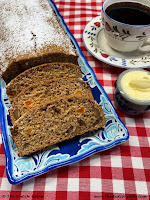
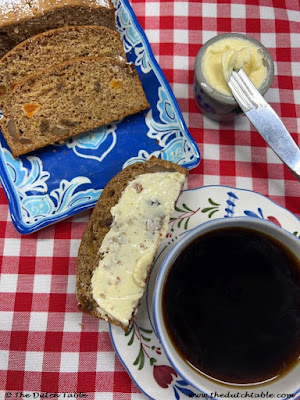
And when you do, you will see that Drenthe embraces its turf history with gusto. A typical product that you will find at local bakeries, and slices of it offered with your cup of coffee, is the Drenthse turfkoek, a turf cake, so called because of its appearance. Its shape, elongated and rounded at the edges, is said to mimic the shape of a peat log. This is a fairly new invention, which results in different bakers using a variety of approaches, all tasty and delicious. The main ingredients are koekkruiden (a mix of herbs and spices), brown sugar, milk, and dried fruits and nuts. I used brandied walnuts, raisins (boerenjongens), and apricots (boerenmeisjes) from my oliebollen baking on New Year's eve, but you can also use apple, chocolate chips, or anything else that you fancy. You're looking for a sturdy cake with lots of chunky fillings, much like a peat log, but better tasting :-)
If you don't have an oval tin to bake in, you can easily use an 8 x 4, or a 9 x 5 cake form.
3/4 cup dark brown sugar (150 grams)
2 teaspoons baking powder
pinch of salt
3 teaspoons koekkruiden*
1/4 cup chopped walnuts (75 grams)
3/4 cup dried fruits (currants, raisins, apricots...)** (100 grams)
1 egg
1 cup milk (250 ml)
Mix the dry ingredients together (flour, sugar, baking powder, salt, spices, walnuts, dried fruits). Beat the egg with the milk and pour the liquid into the bowl with the dry mix.
Grease a baking form, pour in the batter, and bake at 325F for 40 minutes, or until the cake is done. Test for doneness with a toothpick or metal skewer: if it comes out dry, the cake is done.
Cool on a rack for five to ten minutes, then take out of the form and wrap in clingfilm. As the cake does not have any fat, it will dry out faster, so keep it wrapped.
Dust lightly with powdered sugar, and slice in thick slices, slather with butter (or not) and serve with a cup of coffee or tea.
**soak your dried fruit in warm water for thirty minutes, then drain and pat dry before folding in the flour
Appeltaart
"Koffie met appeltaart", coffee with apple pie, what a traditional Dutch way of celebrating eh...anything! City cafés that want to lure customers in will advertise homemade, overly delicious apple pie on their street signs. Spend a couple of hours at an outdoor market and the smell of freshly baked apple pie will draw you in: don't fight it, but just give in. Sit down at one of the many outdoor terrasjes, or patios, that the cafés have, order a koffie verkeerd or a hot cup of tea, and let yourself be treated to a traditional Dutch apple pie. It's probably one of the first pies that young people learn how to bake and it's one of those delicacies that grandma's are usually very, very good at making.
The dough is made with butter and eggs and the apples are flavored with lemon juice and speculaas spices. It's usually baked in a springform and shows the filling through an elaborate lattice cover. It's seems like a lot of work, but trust me: it's so worth it! Try a variety of apples for a more complex flavor, f.ex. three Honeycrisp, three Roma and two Granny Smith.
1 cup (250 grams) golden raisins, soaked*
1 tablespoon speculaas spices
2 tablespoons custard or vanilla pudding powder
2 tablespoons panko or unseasoned breadcrumbs
1/4 cup (50 grams) sugar
Brushing
1 egg yolk beaten with 1 tablespoon heavy cream
1 tablespoon coarse sugar (or regular sugar)
Let the pie cool on a rack, then cut into generous pieces and serve with a slightly sweetened dollop of whipped cream. Sit back and enjoy your hard labor: you deserved it!
Tip: you can also make five single serve hand pies out of the same amount. The small ones freeze well and are good to have around in case company shows up, or in case you feel like celebrating something. And if you have nothing to celebrate, you could celebrate the fact that you have nothing to celebrate!
* Soak the raisins in warm apple juice, a little bit of rum, or use boerenjongens. Lovely! And if you don't like raisins, don't put them in. Try cranberries, or walnuts, pecans...just make it your own!
Appelkruimelvlaai
Vlaai, a broad and flat yeast dough pie, is originally from the province of Limburg. During the weekly bread baking duties, women would often flatten out a piece of leftover bread dough and cover it with slices of fresh fruit or a ladle of sweet jam, so that they had something to eat with their coffee (and you know how much we like our coffee time!). When the bread baking was delegated to the village baker, who baked and brought it to the house, vlaaien would only be baked for Sunday visits, during village fairs and for the holidays.
Baking vlaai on Sunday is still a bit of a tradition in the South, and a piece of warm vlaai straight out of the oven is often eaten for lunch, with a cup of coffee or two. Depending on what fruit is seasonal and ripe, you could get apple vlaai, cherry vlaai or plum vlaai. If there was no fruit to be had, or it was a special occasion, sometimes you'd get kruimelvlaai, a sweet custardy vlaai with crunchy streusel on top.
Today's vlaai, appelkruimelvlaai, or apple crumble vlaai, is similar to the Dutch apple pie that many are familiar with, albeit it with less sugar. The natural flavor of the apple is allowed to shine through, and because you only bake it for 25 to 30 minutes, some of the apple still has a bit of a bite. Fantastic!
The vlaai dough is easy to make. The average vlaai pan is 11 inches (28 cm) wide and a little over 1 inch (2.5 cm) high, but any similar size will do, so don't let that hold you back!Appelkruimelvlaai
For the dough
Dissolve the yeast in the warm milk, and let it proof while you measure out the rest of the ingredients. Add the flour to a mixing bowl, sprinkle the sugar and salt on top and give it a stir. Now pour in the milk with the yeast and start mixing. As the dough comes together, add in the egg and the soft butter and let the whole mixture come together while you need it into a soft dough. (You may need to add a tablespoon or two of milk in case the dough turns out to be a bit dry).
Form the dough into a ball, put it in a bowl, cover and let it rise. In the meantime, make the filling.
For the filling*
4 to 5 large apples, various flavors
1 tablespoon lemon juice
3 tablespoons (50 grams) sugar
1/2 teaspoon cinnamon
3 heaping tablespoons (30 grams) cornstarch
2 tablespoons panko
1 cup (150 grams) all purpose flour
1 stick butter (110 grams), cold
1/2 cup (100 grams) sugar
Peel and core the apples, then cut into dice. Slices are okay too, but for this pie I like the cubes, they add a bit of texture. Toss the apples with the lemon juice, the sugar, cinnamon and the cornstarch. Keep the panko aside until you are ready to assemble the vlaai.
Grease your pie pan, or vlaaivorm, and roll out the dough into a large circle. Transfer it to the pan, and cut off any excess dough you may have. Poke holes in the dough so that it doesn't seize up while baking, cover and let it rest while you make the kruimeltopping.
Cut the butter for the topping into small pieces. Mix the flour and the sugar in a bowl, and rub the butter between your fingers in the flour. I tend to put flour and butter between the palms of my hands and rub them together (I have no patience!) until the mixture resembles wet sand.Heat your oven to 400F/200C. Sprinkle the panko on top of the dough (this prevents too much juice going into the dough and making it soggy). Pour the apple mixture on top of the vlaai dough, flatten it out a bit and then top with the crumble. Bake in the oven for 25 minutes, and check to see if your kruimeltopping is browning. If it's not already golden, give it five more minutes and then finish it under the broiler for a nice golden color. Do not walk away at this point, these broilers are fast!!
Let the vlaai cool so that the filling can settle, cut into generous pieces and enjoy it by itself, with a dollop of whipped cream or a la mode, with a big scoop of ice cream.
*If you would like, you can add raisins, currants, boerenjongens or boerenmeisjes to the filling.